setouchi international art festival 2010
Posted by eidlan on Friday, October 29, 2010
Under: artist
setouchi international art festival 2010
scattered around eight locations of seto inland sea japan:
inujima, megijima, naoshima, ogijima, shima, shodashima, takamatsu port area and teshima
on now until october 31st, 2010
the seto inland sea of japan has been an important nexus of transportation. boats from the mainland have
come and gone, bringing new cultures and lifestyles to the islands which dot the sea. since then,
each island has formed its own culture. however, globalization and increased homogenization has caused
the islands to slowly lose their characteristics due to the aging and decreasing population of the islands.
setouchi international art festival 2010 aims to bring vitality back to the islands of the area.
the event features the work of 75 artists, from 18 countries and regions who bring forth new discoveries in the
workings of our daily life. the islands have become the stages, through which elements of life related to art,
focusing on the islands' lifestyles and history, are exhibited.
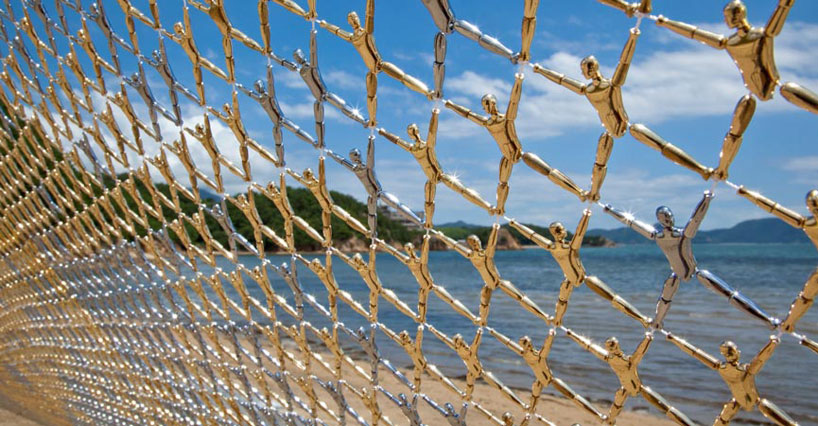
suh do ho
'net-work'
suh do ho has created 'net-work', a system of tunnels covered in fishing nets near the dobuchi strait,
angel road and the beach near tomioka hachiman shrine. at first glance, there appears to be fish drying in the nets,
but upon closer observation, the installation reveals that they are spread-eagled human figures connected at the
hands and feet.
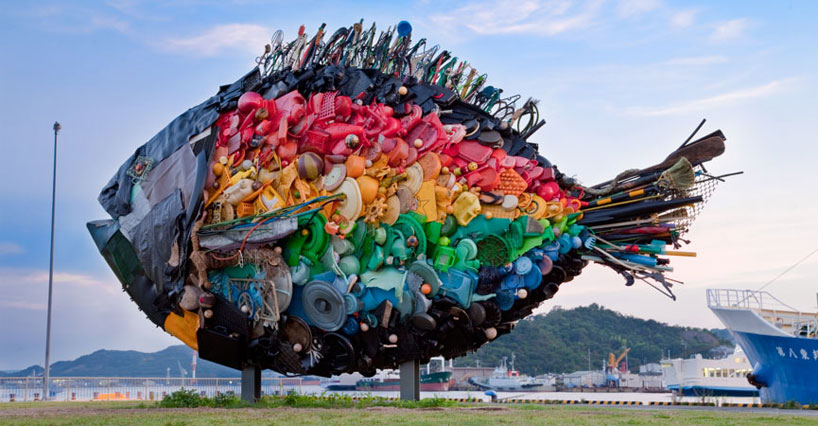
yodogawa-technique
'black porgy in uno'
yodogawa-technique's (hideaki shibata + kazuya matsunaga) 'black porgy in uno' is a giant, life-like fish
built from flotsam and jetsam, washed up on the shores along the seto inland sea. much of the garbage collected
not only originated in japan, but also in other parts of the world.
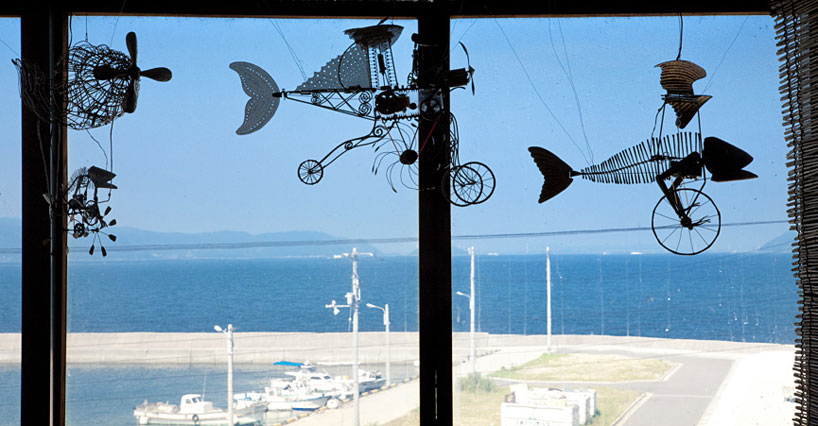
takashi imura
'karakurin'
takashi imura is an artist known for his 'karakurin', imaginary sea creatures made from copper and bronze.
on the island of ogijima, a number of these mechanical objects are hung at madoka, a restaurant that serves
cuisine made from local seafood. by displaying these creatures in this location - by the windows and on the terrace -
the 'karakurin' fuse with the scenery of the seaport.
scattered around eight locations of seto inland sea japan:
inujima, megijima, naoshima, ogijima, shima, shodashima, takamatsu port area and teshima
on now until october 31st, 2010
the seto inland sea of japan has been an important nexus of transportation. boats from the mainland have
come and gone, bringing new cultures and lifestyles to the islands which dot the sea. since then,
each island has formed its own culture. however, globalization and increased homogenization has caused
the islands to slowly lose their characteristics due to the aging and decreasing population of the islands.
setouchi international art festival 2010 aims to bring vitality back to the islands of the area.
the event features the work of 75 artists, from 18 countries and regions who bring forth new discoveries in the
workings of our daily life. the islands have become the stages, through which elements of life related to art,
focusing on the islands' lifestyles and history, are exhibited.
suh do ho
'net-work'
suh do ho has created 'net-work', a system of tunnels covered in fishing nets near the dobuchi strait,
angel road and the beach near tomioka hachiman shrine. at first glance, there appears to be fish drying in the nets,
but upon closer observation, the installation reveals that they are spread-eagled human figures connected at the
hands and feet.
yodogawa-technique
'black porgy in uno'
yodogawa-technique's (hideaki shibata + kazuya matsunaga) 'black porgy in uno' is a giant, life-like fish
built from flotsam and jetsam, washed up on the shores along the seto inland sea. much of the garbage collected
not only originated in japan, but also in other parts of the world.
takashi imura
'karakurin'
takashi imura is an artist known for his 'karakurin', imaginary sea creatures made from copper and bronze.
on the island of ogijima, a number of these mechanical objects are hung at madoka, a restaurant that serves
cuisine made from local seafood. by displaying these creatures in this location - by the windows and on the terrace -
the 'karakurin' fuse with the scenery of the seaport.
In : artist